



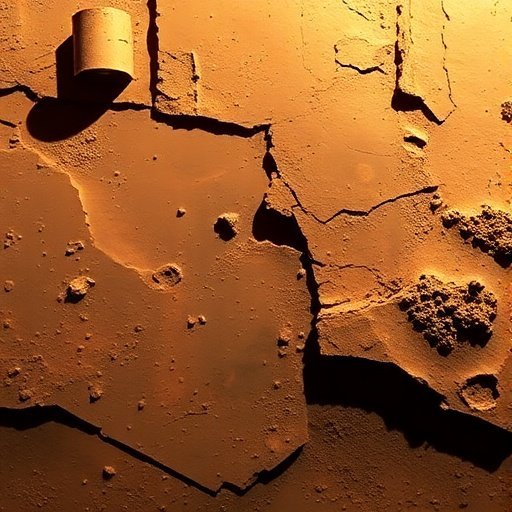
NASA Perseverance Discovers New Clues That May Point to Ancient Life on Mars
Mars has fascinated scientists for generations. Once believed to be a cold and lifeless desert, the Red Planet is now revealing evidence that billions of years ago it may have looked very different. Thanks to NASA’s Perseverance rover, researchers are collecting some of the strongest geological evidence yet that Mars once had rivers, lakes, and environmental conditions capable of supporting microbial life.
While no evidence of ancient life has been confirmed, Perseverance has discovered rock formations, organic molecules, and sedimentary structures that suggest Mars was once a potentially habitable world. Each new sample helps scientists understand whether life could have existed beyond Earth.
This article explores the latest discoveries, why Jezero Crater is important, how the rover works, and what these findings could mean for the future of space exploration.
NASA’s Perseverance Mission at a Glance
| Feature | Details |
|---|---|
| Mission Name | NASA Mars 2020 – Perseverance |
| Landing Date | February 18, 2021 |
| Landing Site | Jezero Crater, Mars |
| Mission Goal | Search for signs of ancient microbial life and collect rock samples |
| Rover Weight | About 1,025 kg |
| Power Source | Radioisotope Thermoelectric Generator |
| Helicopter | Ingenuity (technology demonstration) |
Why Scientists Chose Jezero Crater
Jezero Crater is one of the most scientifically valuable places on Mars. Billions of years ago, it contained a lake fed by a river system. On Earth, ancient lakebeds often preserve biological and geological evidence for millions or even billions of years.
Scientists believe that if microbial life ever existed on Mars, the sediments in Jezero Crater would be among the best places to search.
Why Jezero Crater Matters
- Evidence of an ancient river delta
- Clay minerals formed in water
- Sedimentary rock layers
- Long history of water activity
- Excellent location for collecting preserved rock samples
What Perseverance Has Discovered
The rover has made several important discoveries that help scientists reconstruct Mars’ ancient environment.
| Discovery | Why It Is Important |
|---|---|
| Sedimentary Rocks | Indicate long-term interaction with water |
| Organic Molecules | Building blocks associated with life, though not proof of life |
| Ancient River Deposits | Suggest flowing water once existed |
| Carbonate Minerals | Could preserve evidence of ancient environments |
| Layered Rock Formations | Record changes in the Martian climate over time |
These discoveries point toward an environment that may once have been suitable for simple microbial organisms.
What Are Organic Molecules?
Organic molecules are chemical compounds that contain carbon. They are essential ingredients for life on Earth, but they can also form through non-biological processes.
Finding organic molecules on Mars is scientifically exciting because it shows that some of the chemical ingredients associated with life were present. However, scientists emphasize that organic molecules alone are not evidence that life existed.
| Organic Molecules Can Form Through | Example |
|---|---|
| Biological Processes | Living organisms |
| Geological Activity | Chemical reactions in rocks |
| Meteorite Impacts | Carbon-rich space material |
Evidence of Ancient Water on Mars
One of Perseverance’s greatest achievements has been strengthening evidence that liquid water once existed on Mars.
Scientists have observed:
- Ancient river channels
- Delta formations
- Rounded pebbles
- Water-shaped rock layers
- Minerals formed in wet environments
Together, these discoveries indicate that Jezero Crater once hosted a long-lasting lake, creating conditions that may have been favorable for microbial life.
How Perseverance Collects Samples
Unlike previous Mars rovers, Perseverance is designed to collect and seal carefully selected rock samples for possible return to Earth in a future mission.
Sample Collection Process
| Step | Description |
|---|---|
| Identify Target | Cameras and scientific instruments analyze rocks. |
| Drill Sample | A core of rock is collected. |
| Seal Tube | The sample is placed in a sterile container. |
| Store Sample | Tubes are kept safely for future retrieval. |
Scientists hope laboratory analysis on Earth will reveal details that cannot be measured on Mars.
Advanced Scientific Instruments
Perseverance carries sophisticated equipment to study the Martian surface.
| Instrument | Purpose |
|---|---|
| Mastcam-Z | High-resolution panoramic imaging |
| SuperCam | Rock composition analysis |
| PIXL | Detects chemical elements |
| SHERLOC | Searches for organic compounds and minerals |
| MEDA | Monitors weather conditions |
| RIMFAX | Studies underground structures |
These instruments work together to build a detailed picture of Mars’ geological history.
Why the Search for Ancient Life Is Difficult
Finding evidence of ancient life is one of the greatest scientific challenges.
Scientists must distinguish between biological and non-biological processes.
Challenges include:
- Harsh radiation
- Dust storms
- Billions of years of geological change
- Limited laboratory equipment on Mars
- Small sample sizes
For this reason, researchers remain cautious and rely on multiple lines of evidence before drawing conclusions.
Why This Research Matters
Understanding Mars helps answer some of humanity’s biggest questions.
| Scientific Question | Why It Matters |
|---|---|
| Did Mars once support life? | Helps us understand whether life is common in the universe. |
| How did Mars change? | Reveals how planets evolve over billions of years. |
| Can humans explore Mars? | Supports future crewed missions. |
| Could resources be used on Mars? | Important for long-term exploration. |
Future Mars Missions
Future missions will build on Perseverance’s discoveries.
Expected goals include:
- Returning rock samples to Earth
- Searching for additional biosignatures
- Exploring underground ice
- Testing technologies for human missions
- Preparing for long-term exploration
Sample-return missions could provide scientists with far more detailed laboratory analysis than is possible on Mars.
Frequently Asked Questions
| Question | Answer |
|---|---|
| Has NASA found life on Mars? | No. Scientists have found promising geological and chemical clues, but no confirmed evidence of past or present life. |
| Why is Jezero Crater important? | It was once home to an ancient lake and river delta, making it an ideal location to search for signs of ancient habitability. |
| What are organic molecules? | Carbon-containing compounds that can form through biological or natural geological processes. |
| What is Perseverance’s main mission? | To study Mars’ geology, search for possible signs of ancient microbial life, and collect rock samples for future return to Earth. |
| Will humans go to Mars? | Several space agencies are planning future human missions, although no crewed landing has taken place yet. |
Internal Linking Suggestions
Strengthen your website’s SEO by linking this article to related topics:
- The Future of Human Missions to Mars
- NASA Artemis Program Explained
- Top Space Discoveries of 2026
- How Mars Rovers Explore the Red Planet
- The Difference Between Mars and Earth
- Space Exploration Technologies Changing the Future
Conclusion
NASA’s Perseverance rover has transformed our understanding of Mars by uncovering compelling evidence that the planet once had rivers, lakes, and environments capable of supporting microbial life. Although no confirmed signs of ancient life have been found, discoveries such as sedimentary rocks, organic molecules, and ancient lake deposits continue to strengthen the case that Mars was once far more hospitable than it is today.
As Perseverance continues its exploration and prepares valuable rock samples for future return to Earth, scientists hope to answer one of the greatest questions in history: Was life ever present beyond our planet? Every new discovery brings humanity one step closer to understanding the Red Planet and our place in the universe.