



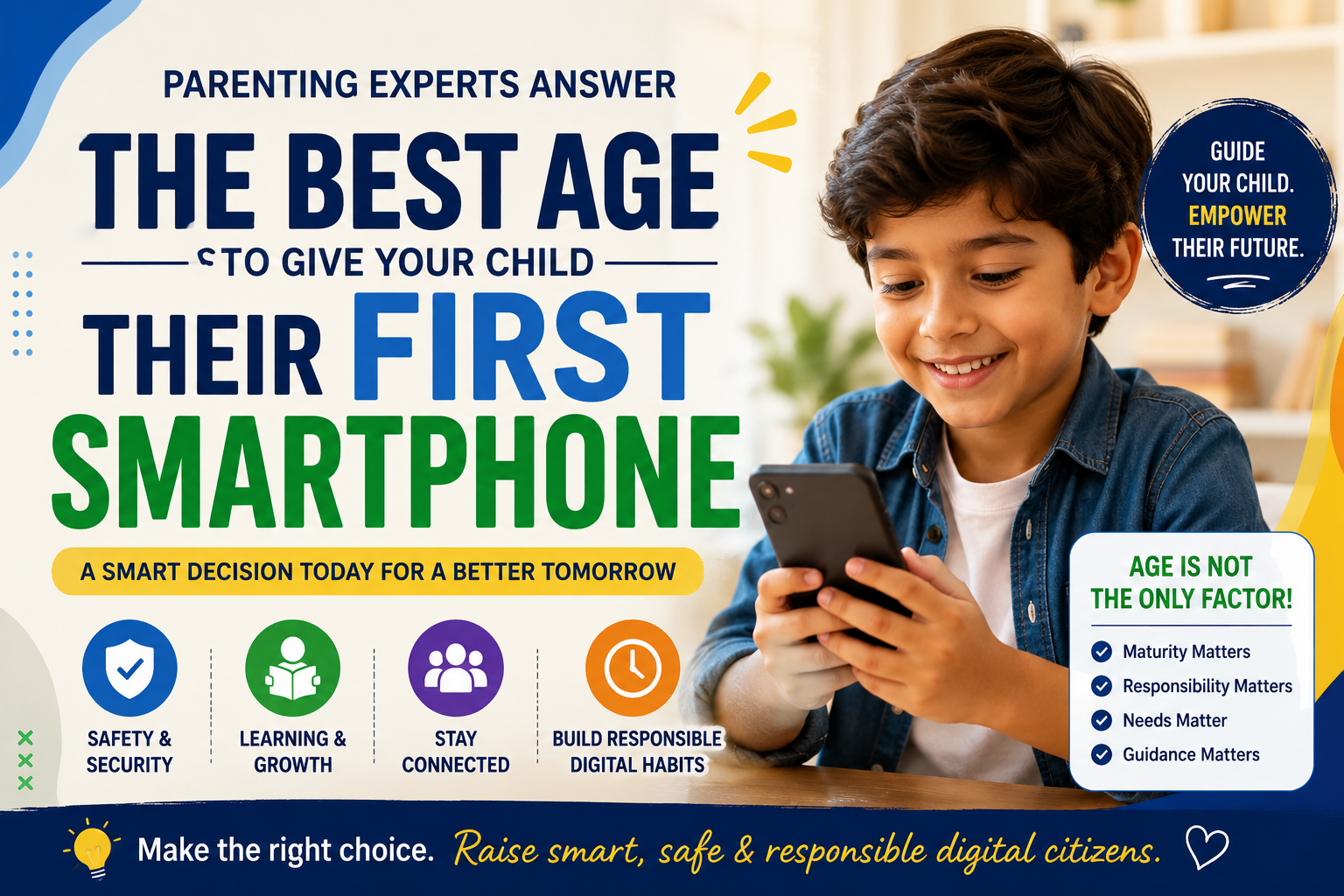
The Best Age to Give Your Child Their First Smartphone
For many parents, deciding when to give a child their first smartphone is one of the biggest parenting challenges in today’s digital world. Smartphones have become essential tools for communication, education, navigation, and entertainment. At the same time, they also expose children to online risks, excessive screen time, cyberbullying, and social media pressure.
There is no single “perfect” age that works for every child. Parenting experts generally agree that the decision should be based on a child’s maturity, responsibility, daily needs, and family rules rather than age alone. Some children may be ready earlier, while others benefit from waiting until they demonstrate responsible behavior.
This guide explains expert recommendations, signs of readiness, potential risks, and practical tips to help parents make an informed decision.
Why Parents Consider Buying a Smartphone
Parents often purchase a smartphone for safety and convenience rather than entertainment. A phone allows children to stay connected with family, especially when traveling to school, participating in extracurricular activities, or spending time away from home.
Common reasons include:
- Emergency communication
- School coordination
- GPS location sharing
- Educational apps
- Online learning
- Staying connected with parents
- Access to digital resources
- Family communication
While these benefits are valuable, they should be balanced with age-appropriate boundaries.
Expert Recommendations by Age
| Age Group | General Recommendation | Suitable Device |
|---|---|---|
| Under 10 Years | Avoid personal smartphones unless necessary | Basic calling device or family phone |
| 10–12 Years | Consider only if needed with strong parental supervision | Entry-level smartphone with parental controls |
| 13–15 Years | Appropriate for many children with clear rules | Smartphone with screen-time management |
| 16+ Years | Greater independence while maintaining healthy digital habits | Standard smartphone with ongoing guidance |
Experts emphasize that these are broad guidelines. Every child develops differently, so parents should consider individual maturity and responsibility.
Signs Your Child May Be Ready
Before buying a smartphone, ask whether your child demonstrates responsible behavior in everyday life.
Positive signs include:
- Follows household rules consistently
- Completes homework without reminders
- Takes care of personal belongings
- Understands online safety basics
- Communicates openly with parents
- Handles responsibilities independently
- Respects screen-time limits
- Uses shared devices responsibly
A child who already manages responsibilities well is more likely to use a smartphone responsibly.
Benefits of Giving a Child a Smartphone
When introduced thoughtfully, smartphones can provide several advantages.
Better Communication
Children can quickly contact parents during emergencies or schedule changes.
Educational Opportunities
Many educational apps support reading, mathematics, science, coding, and language learning.
Navigation and Safety
GPS features help families coordinate pickups and provide peace of mind.
Digital Skills
Learning to use technology responsibly prepares children for future education and careers.
Potential Risks Parents Should Know
Along with benefits, smartphones introduce challenges that require active parental involvement.
| Risk | Why It Matters |
|---|---|
| Excessive Screen Time | May affect sleep, concentration, and physical activity |
| Cyberbullying | Can impact emotional well-being |
| Online Predators | Children may interact with strangers |
| Inappropriate Content | Not all online content is suitable for children |
| Social Media Pressure | May affect confidence and mental health |
| Gaming Addiction | Can interfere with school and family life |
| Privacy Risks | Personal information may be shared unintentionally |
Understanding these risks helps parents establish appropriate safeguards.
Questions Every Parent Should Ask
Before purchasing a smartphone, consider the following questions:
- Why does my child need a smartphone?
- Can a basic phone meet the same need?
- Is my child responsible with other devices?
- Do we have clear family technology rules?
- Am I prepared to monitor smartphone use?
- Does my child understand online privacy and digital safety?
Honest answers to these questions can help determine whether the timing is right.
Setting Healthy Family Rules
A smartphone should come with clear expectations from the beginning.
Consider rules such as:
- No phones during meals.
- Keep phones out of bedrooms overnight.
- Finish homework before recreational screen time.
- Never share passwords with friends.
- Avoid downloading apps without permission.
- Talk to parents about uncomfortable online experiences.
- Respect others when taking photos or videos.
- Balance screen time with outdoor activities and family time.
Consistency is more important than strictness. Clear, age-appropriate rules help children build healthy digital habits.
Understanding the Right Time
There is no universal age at which every child should receive their first smartphone. Parenting experts generally agree that maturity, responsibility, and genuine need are more important than age alone. While some children may be ready at 11 or 12 years old, others may benefit from waiting until they are older. Parents should evaluate how responsibly their child follows rules, manages schoolwork, and handles technology before making the decision.
A smartphone can be an excellent learning and communication tool when introduced at the right time with proper guidance. However, without clear boundaries, it may also lead to excessive screen time, distraction, and online safety concerns. The goal is to help children develop healthy digital habits from the beginning.
Recommended Age by Parenting Experts
| Child’s Age | Recommendation | Suggested Device |
|---|---|---|
| Under 10 Years | Avoid a personal smartphone unless absolutely necessary | Basic calling phone or shared family device |
| 10–12 Years | Consider a smartphone only if there is a genuine need and parental supervision | Entry-level smartphone with parental controls |
| 13–15 Years | Suitable for many children if family rules and screen-time limits are followed | Smartphone with parental monitoring features |
| 16 Years and Above | Greater independence while continuing digital safety discussions | Standard smartphone with responsible usage guidelines |
Signs Your Child Is Ready
| Sign | Why It Matters |
|---|---|
| Completes homework without reminders | Shows responsibility |
| Follows household rules | Indicates self-discipline |
| Takes care of personal belongings | Suggests maturity |
| Understands internet safety | Reduces online risks |
| Communicates openly with parents | Encourages trust |
| Respects screen-time limits | Helps prevent overuse |
| Makes good decisions independently | Demonstrates readiness |
Benefits of Giving a Smartphone
| Benefit | Explanation |
|---|---|
| Emergency Communication | Children can quickly contact parents or guardians. |
| Educational Apps | Supports learning through interactive tools and online resources. |
| GPS Tracking | Parents can know their child’s location when appropriate. |
| Family Communication | Makes it easier to stay connected throughout the day. |
| Digital Skills | Builds confidence using technology responsibly. |
| Online Learning | Enables access to school assignments and educational content. |
Possible Risks
| Risk | Potential Impact |
|---|---|
| Excessive Screen Time | Reduced physical activity and sleep quality |
| Cyberbullying | Emotional stress and anxiety |
| Social Media Pressure | Lower self-esteem and unhealthy comparisons |
| Exposure to Inappropriate Content | Access to unsuitable material |
| Online Scams | Risk of fraud or identity theft |
| Gaming Addiction | Can interfere with school and family time |
| Privacy Issues | Personal information may be shared unintentionally |
Essential Family Smartphone Rules
| Rule | Purpose |
|---|---|
| No phones during meals | Encourages family conversations |
| Keep phones out of bedrooms at night | Promotes healthy sleep habits |
| Homework before entertainment | Supports academic success |
| Ask permission before downloading apps | Protects against unsafe applications |
| Never share passwords | Improves online security |
| Report suspicious messages | Encourages safe internet use |
| Respect others online | Builds responsible digital citizenship |
Features to Look for in a Child’s First Smartphone
| Feature | Why It’s Important |
|---|---|
| Parental Controls | Monitor and manage device usage |
| GPS Location Sharing | Added peace of mind |
| Screen-Time Management | Encourages balanced use |
| Durable Design | Better protection against accidental drops |
| Good Battery Life | Reliable communication throughout the day |
| Affordable Price | Ideal for a first device |
| Software Updates | Improves security and performance |
Smartphone vs Basic Phone
| Feature | Smartphone | Basic Phone |
|---|---|---|
| Calling | ✔ | ✔ |
| Messaging | ✔ | ✔ |
| Educational Apps | ✔ | ✘ |
| Internet Access | ✔ | Limited |
| GPS Navigation | ✔ | Limited |
| Entertainment | ✔ | Limited |
| Parental Controls | ✔ | Basic |
Tips for Parents
- Set screen-time limits from the first day.
- Talk regularly about online safety and privacy.
- Keep smartphones out of bedrooms overnight.
- Encourage outdoor play and family activities.
- Review installed apps together.
- Teach children never to share personal information with strangers.
- Lead by example through healthy smartphone habits.
Frequently Asked Questions
| Question | Answer |
|---|---|
| What is the ideal age for a child’s first smartphone? | Many experts recommend waiting until around 12–14 years, depending on the child’s maturity and needs. |
| Should children under 10 have smartphones? | Generally, a basic phone or shared family device is a better option unless there is a specific need. |
| How much screen time is appropriate? | It varies by age, but parents should set consistent daily limits and prioritize school, sleep, and physical activity. |
| Are parental controls necessary? | Yes. They help manage screen time, app downloads, and online safety. |
| What is the biggest concern with smartphones? | Unsupervised internet access, excessive screen time, and exposure to inappropriate content. |
Conclusion
There is no universal age at which every child should receive their first smartphone. Parenting experts encourage families to focus on maturity, responsibility, and genuine need rather than comparing with classmates or social trends. By introducing technology gradually, setting clear expectations, and maintaining open communication, parents can help children enjoy the benefits of smartphones while reducing potential risks.