



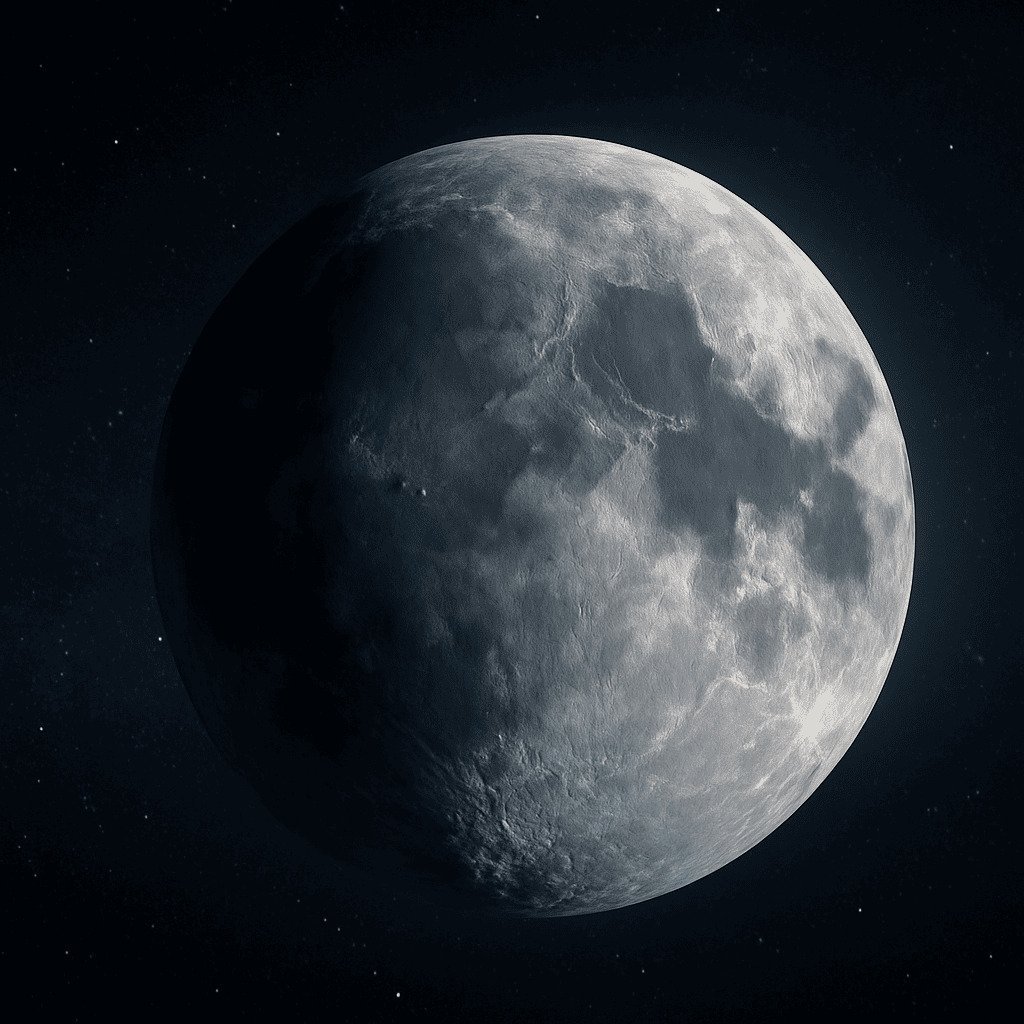
NASA Confirms Water on the Moon’s South Pole, Plans Crewed Mission by 2028
NASA has taken another major step toward returning humans to the Moon. Scientists have confirmed that water exists in and around the Moon’s south polar region, while the agency’s Artemis program is working toward sending astronauts back to the lunar surface, with the first crewed landing now targeted for 2028 under the revised mission plan. The south pole has become the primary destination because it is believed to contain significant water ice deposits that could support long-term human exploration. (NASA Science)
The discovery of lunar water is more than a scientific achievement. Water is one of the most valuable resources for future space missions because it can provide drinking water, oxygen for breathing, and hydrogen and oxygen that can be converted into rocket fuel. If astronauts can use resources already available on the Moon, future missions to the Moon and eventually Mars could become more practical and sustainable. (NASA Science)
Why the Moon’s South Pole Is So Important
Unlike the Moon’s equatorial regions, the south pole contains deep craters that remain in permanent shadow. Because sunlight never reaches some of these areas, temperatures stay extremely low, allowing water ice to survive for billions of years.
Scientists believe these frozen deposits could become essential resources for future lunar bases.
Key reasons the south pole is attracting global attention include:
- Presence of water ice
- Nearly continuous sunlight on nearby high ridges for solar power
- Scientific opportunities to study the Moon’s history
- Potential for long-term human habitation
- Ideal location for future exploration missions
NASA’s Evidence for Water on the Moon
NASA has spent years studying the lunar surface using orbiters, telescopes, and international missions.
Several discoveries have strengthened the evidence for lunar water:
| Mission | Major Discovery |
|---|---|
| Chandrayaan-1 (NASA instrument onboard) | Confirmed water signatures across the Moon |
| Lunar Reconnaissance Orbiter (LRO) | Mapped permanently shadowed regions containing ice |
| LCROSS Mission | Confirmed water ice inside a lunar crater |
| SOFIA Observatory | Detected water molecules on sunlit portions of the Moon |
Together, these missions confirmed that water exists not only inside permanently shadowed craters but also in smaller quantities on sunlit parts of the lunar surface. (NASA Science)
How Water Could Support Future Moon Missions
Water is one of the most valuable natural resources for space exploration.
| Resource | Potential Use |
|---|---|
| Drinking Water | Supports astronauts during long missions |
| Oxygen | Can be extracted for breathing |
| Hydrogen | Can be converted into rocket fuel |
| Agriculture | May help grow food in future lunar habitats |
| Scientific Research | Helps scientists understand the Moon’s history |
Using local resources instead of transporting everything from Earth could significantly reduce mission costs. (NASA)
NASA’s Artemis Program
The Artemis program represents NASA’s long-term effort to establish a sustainable human presence on and around the Moon.
Following revisions announced in 2026, NASA’s current plan includes a crewed lunar landing through Artemis IV in 2028, with astronauts expected to explore the Moon’s south polar region and conduct scientific research. (NASA)
Artemis Mission Timeline
| Mission | Status |
|---|---|
| Artemis I | Completed uncrewed test mission |
| Artemis II | Crewed lunar flyby mission |
| Artemis III | Technology demonstration mission |
| Artemis IV | Planned crewed lunar landing near the south pole (2028) |
Scientific Goals of the South Pole Mission
NASA plans to conduct a wide range of scientific investigations during future lunar surface missions.
Expected objectives include:
- Collecting rock and soil samples
- Investigating water ice deposits
- Testing new exploration technologies
- Studying lunar geology
- Demonstrating resource utilization
- Preparing for permanent lunar exploration
The mission is also expected to help scientists understand how water formed on the Moon and whether it can be used safely by future astronauts. (NASA)
Why This Discovery Matters
The confirmation of water near the Moon’s south pole changes the future of space exploration.
Instead of treating the Moon as a destination for short visits, agencies now see it as a potential base for deeper missions into the Solar System.
Potential long-term benefits include:
- Permanent research stations
- International scientific collaboration
- Testing technologies for Mars missions
- Lower mission costs through local resource use
- Expanded commercial opportunities in space
Frequently Asked Questions
| Question | Answer |
|---|---|
| Has NASA confirmed water on the Moon? | Yes. Multiple missions have confirmed water ice in permanently shadowed regions and water molecules in some sunlit areas. (NASA Science) |
| Why is the Moon’s south pole important? | It contains water ice, receives favorable sunlight in nearby areas, and is considered ideal for future exploration. |
| When does NASA plan to return astronauts to the Moon? | Under NASA’s revised Artemis plan, the first crewed lunar landing is targeted for 2028 with Artemis IV. (NASA) |
| Can astronauts use lunar water? | Scientists hope future missions will demonstrate how water can be processed into drinking water, oxygen, and rocket fuel. |
| Will the Moon become a permanent human base? | NASA’s long-term goal is to establish a sustained human presence that supports future exploration beyond the Moon. (NASA) |
International Collaboration in Lunar Exploration
Returning humans to the Moon is no longer the effort of a single country. NASA is working with international space agencies and private companies to develop technologies, spacecraft, and infrastructure for long-term lunar exploration. This global partnership allows countries to share scientific knowledge, engineering expertise, and mission resources.
Several nations have shown strong interest in exploring the Moon’s south pole because of its scientific value and potential water resources. International cooperation also helps reduce mission costs and encourages peaceful exploration of space.
| Organization | Contribution |
|---|---|
| NASA | Artemis missions and lunar exploration |
| ESA (European Space Agency) | Service modules and scientific instruments |
| JAXA (Japan) | Lunar technology and rover development |
| CSA (Canadian Space Agency) | Canadarm3 robotic system |
| Commercial Partners | Lunar landers, cargo delivery, and advanced technologies |
The Role of the Lunar Gateway
One of the key components of NASA’s long-term Moon program is the Lunar Gateway, a small space station that will orbit the Moon. Unlike the International Space Station, the Gateway is designed specifically to support lunar missions.
Astronauts will use the Gateway as a staging point before traveling to the Moon’s surface. It will also support scientific research, spacecraft docking, and future missions to Mars.
Benefits of the Lunar Gateway
- Supports long-duration lunar missions
- Provides living space for astronauts
- Enables scientific experiments
- Serves as a communication hub
- Allows spacecraft refueling and docking
- Supports international collaboration
How Water Ice Could Change Space Exploration
Water is considered one of the most valuable natural resources in space. Transporting water from Earth is extremely expensive because every kilogram launched into space requires significant fuel.
If astronauts can collect and process lunar water, they could produce drinking water, breathable oxygen, and hydrogen fuel directly on the Moon.
| Resource Extracted | Possible Use |
|---|---|
| Water | Drinking and hygiene |
| Oxygen | Breathing and life support |
| Hydrogen | Rocket fuel production |
| Combined Resources | Long-term lunar habitats |
Scientists believe this technology, known as In-Situ Resource Utilization (ISRU), could reduce the cost of future deep-space missions.
Advanced Technology Supporting the Artemis Missions
NASA is introducing several next-generation technologies to make lunar exploration safer and more efficient.
These technologies include:
- Advanced lunar spacesuits
- Autonomous lunar rovers
- Artificial intelligence for mission planning
- High-speed communications
- Precision landing systems
- Solar-powered surface equipment
- Improved navigation systems
Each innovation is designed to help astronauts operate safely in the challenging lunar environment.
Challenges of Living on the Moon
Although the Moon offers exciting opportunities, astronauts will face several challenges while working near the south pole.
Major Challenges
| Challenge | Impact |
|---|---|
| Extreme temperatures | Equipment durability |
| Lunar dust | Damage to machinery and spacesuits |
| Radiation exposure | Health risks |
| Low gravity | Muscle and bone loss |
| Limited communication | Operational delays |
| Long mission duration | Psychological challenges |
NASA continues to develop technologies that can overcome these obstacles before establishing a long-term human presence.
Economic Opportunities of Lunar Exploration
The Moon is expected to create new opportunities for science, technology, and commercial industries.
Possible future industries include:
- Space tourism
- Lunar mining research
- Satellite servicing
- Scientific laboratories
- Deep-space transportation
- Space manufacturing
Although many of these industries are still in the early stages, experts believe they could become an important part of the future space economy.
Interesting Facts About the Moon’s South Pole
- Some craters have remained in permanent darkness for billions of years.
- Temperatures inside shadowed craters can drop below −230°C.
- Water ice has been detected in permanently shadowed regions.
- Nearby peaks receive sunlight for much of the lunar year, making them ideal for solar-powered equipment.
- The south pole remains one of the least explored regions of the Moon.
Conclusion
NASA’s confirmation of water in the Moon’s south polar region marks one of the most significant discoveries in modern space exploration. Combined with the Artemis program’s goal of returning astronauts to the lunar surface in 2028, this breakthrough opens the door to a future where humans can live and work on the Moon for extended periods. Water ice could provide essential resources for survival, scientific research, and future missions to Mars, making the lunar south pole one of the most important destinations in space exploration today.